From wastewater audit to water reuse at a poultry slaughterhouse
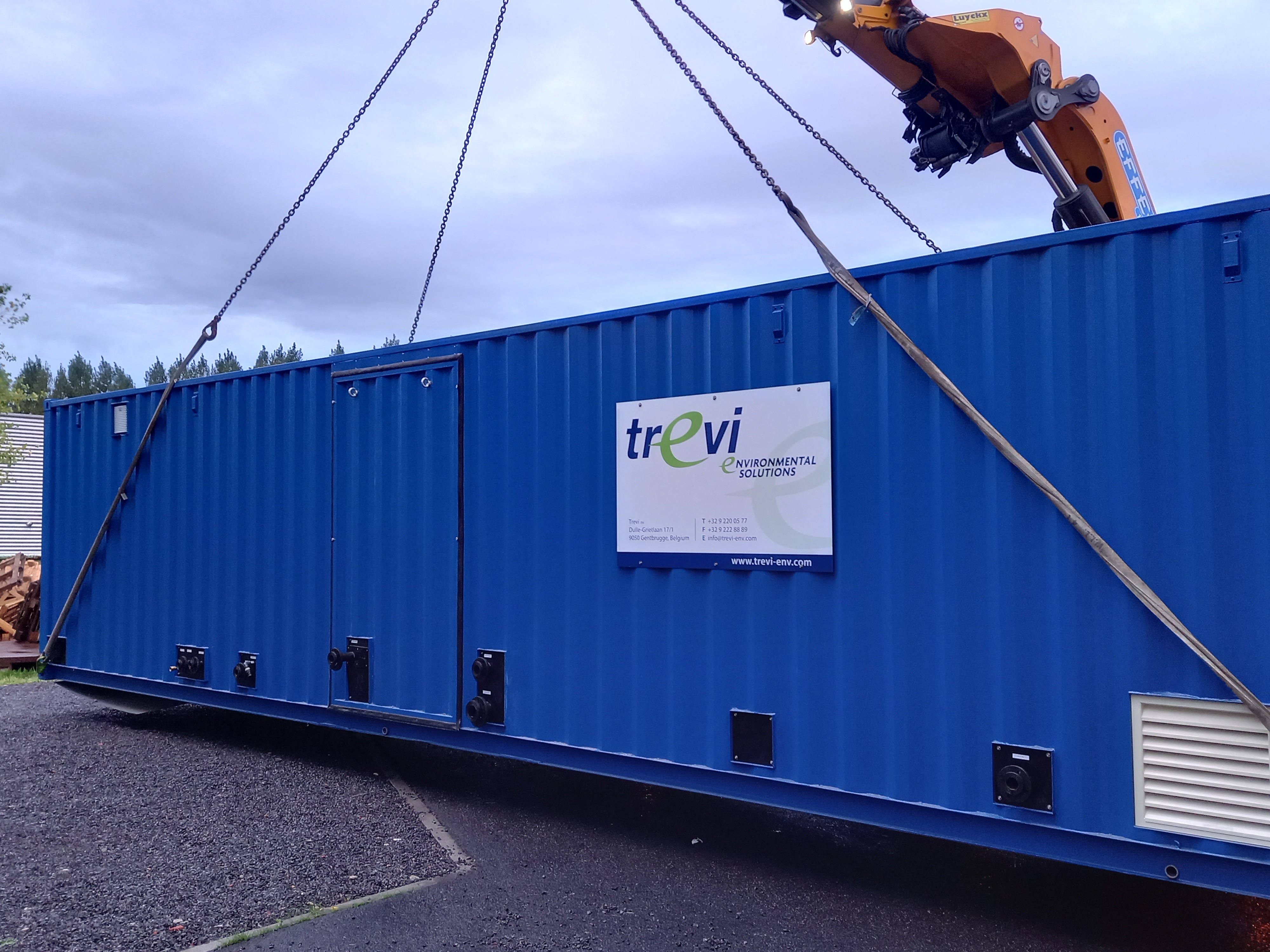
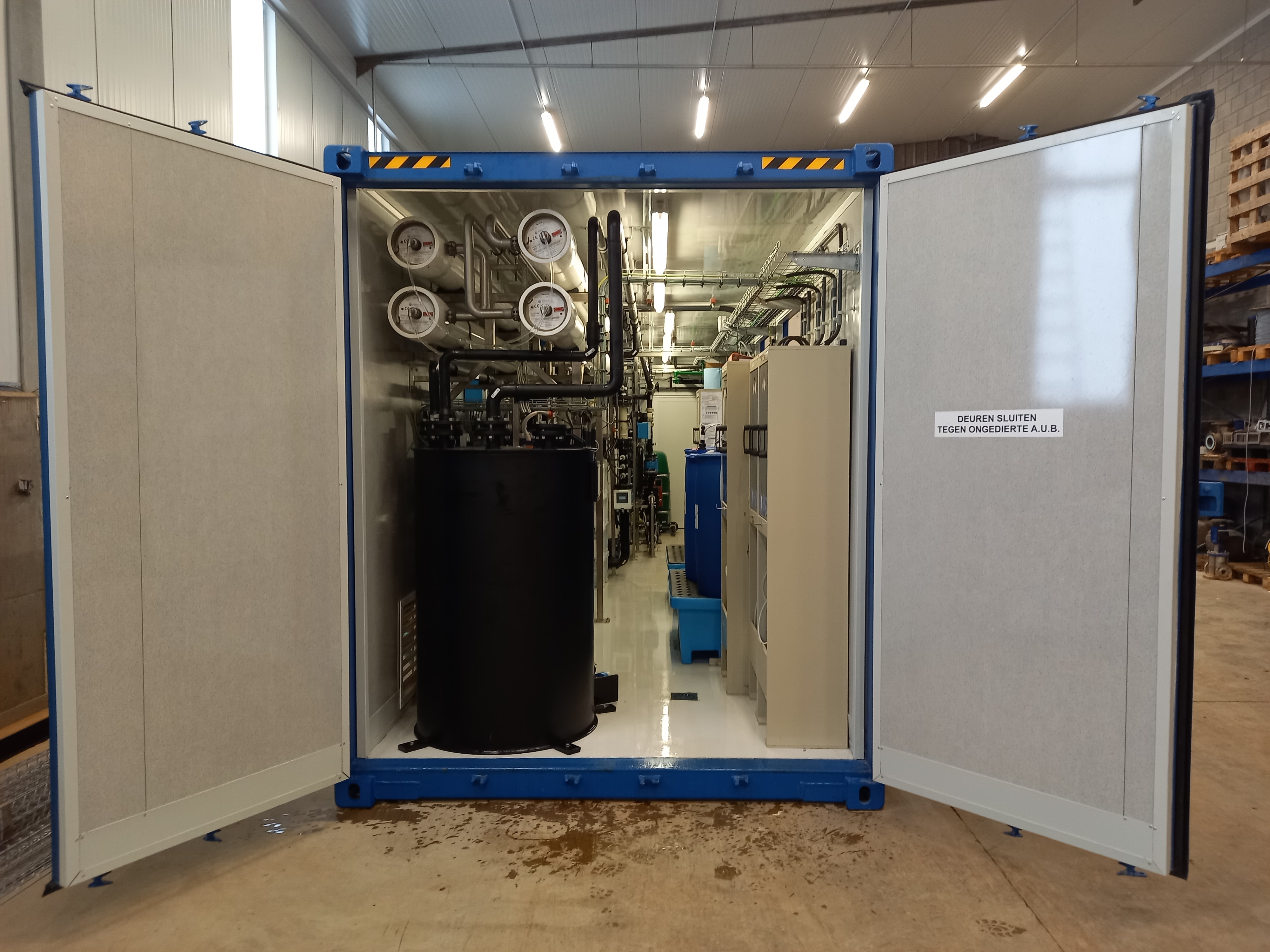
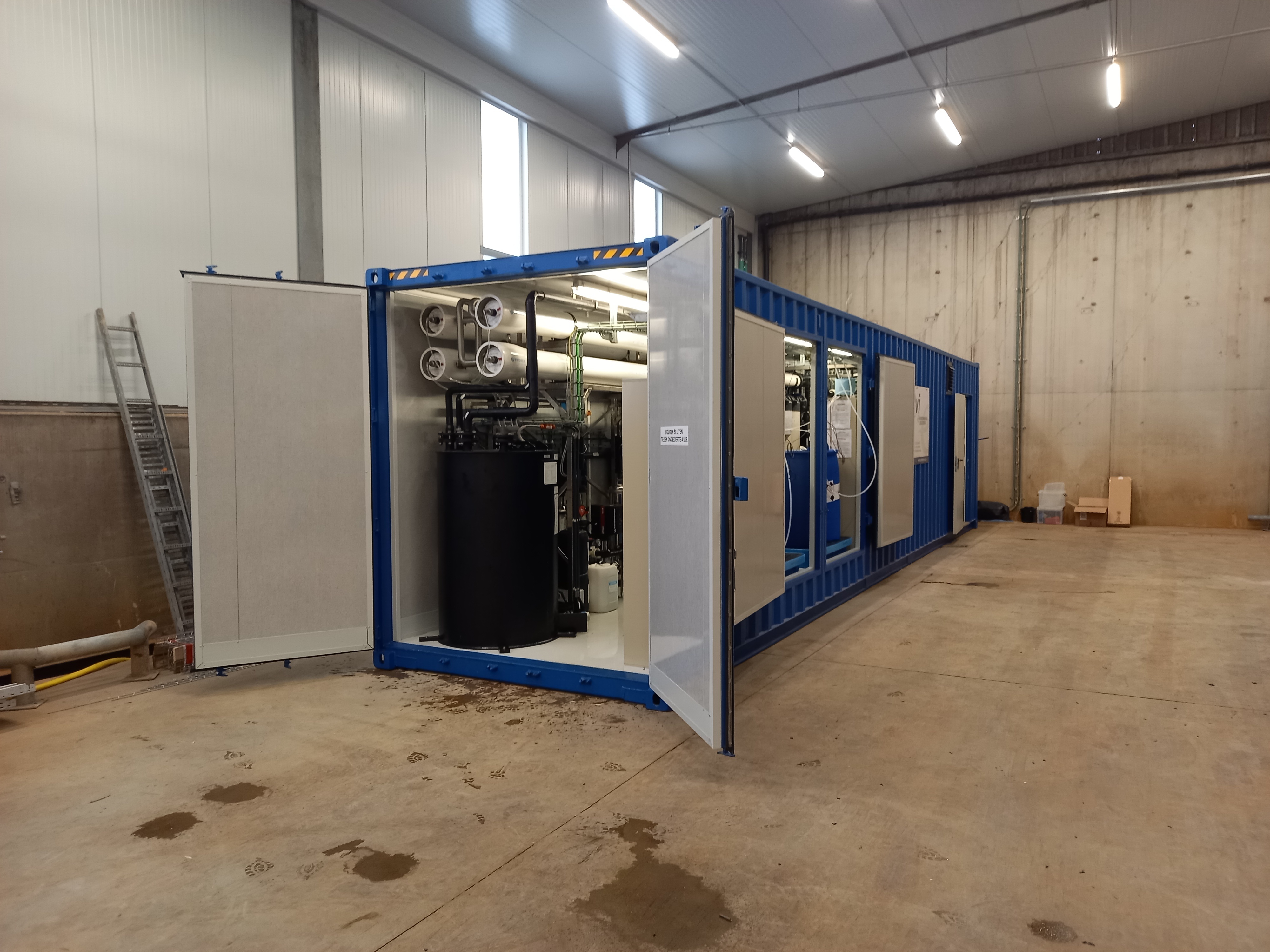
Trevi guided a poultry slaughterhouse in Belgium from a wastewater audit to a containerised ultrafiltration and reverse osmosis (RO) plant for effluent reuse. The plant turns biological effluent into 10 m³/h of water at drinking water quality.
The challenge: growing production under a groundwater cap
The slaughterhouse faced a cap on its groundwater use while increasing its production capacity. Reusing water was the logical answer, but expansion and reuse both change the water balance, the load on the wastewater treatment plant (WWTP) and the discharge. Their impact had to be clear before investing.
Our solution: impact screening first, then UF and RO in a container
- • Extrapolation of the water and waste balance, including the concentration factor caused by reuse
- • Screening of the WWTP capacity for the production expansion
- • Impact assessment of discharge limits and ecotoxicity
- • Evaluation of ultrafiltration and reverse osmosis for drinking water production
- • Construction of a containerised ultrafiltration and RO plant that treats the effluent of the biological WWTP
The result: 10 m³/h of drinking-quality water from effluent
The slaughterhouse made its expansion and reuse decisions on a clear water and waste balance. The containerised plant now delivers 10 m³/h of water at drinking water quality, so treated effluent has become a water source for the site.
